

Why Bookkeeping Is More Than Categorizing Transactions
- rhpersonalbookkeep
- May 30
- 6 min read


Why bookkeeping is more than categorizing transactions is something many small business owners do not fully understand. Many business owners believe bookkeeping is simply the process of assigning transactions to categories. While categorization is certainly an important part of bookkeeping, it represents only a small portion of what professional bookkeeping truly provides.
Accurate bookkeeping creates a complete financial picture of a business. It helps business owners understand profitability, manage cash flow, prepare for taxes, monitor growth, identify problems early, and make informed decisions based on real financial data.
Without proper bookkeeping, business owners often find themselves making decisions based on assumptions rather than facts.
Whether you operate a single-member LLC, sole proprietorship, partnership, or growing company, bookkeeping is much more than organizing expenses. It serves as the financial foundation that supports every aspect of a successful business.
What Is Transaction Categorization?
Transaction categorization involves assigning income and expenses to the appropriate accounting categories.
Examples include:
Income Categories
Sales Revenue
Service Revenue
Interest Income
Rental Income
Expense Categories
Advertising
Office Supplies
Utilities
Insurance
Vehicle Expenses
Payroll
Software Subscriptions
For example:
A landscaping company purchases fuel for work trucks.
The transaction may be categorized as:
Vehicle Expense: Fuel
A consultant pays for QuickBooks Online.
The transaction may be categorized as:
Software Expense
Proper categorization helps organize financial records and creates accurate reports.
However, categorization is only the beginning.
The Real Purpose of Bookkeeping
The true purpose of bookkeeping is to transform financial activity into useful information.
Business owners need answers to questions such as:
Am I profitable?
Where is my money going?
Can I afford to hire an employee?
Should I raise prices?
Why is my bank balance decreasing?
Which services generate the most profit?
Can I qualify for financing?
Transaction categorization alone cannot answer these questions.
Professional bookkeeping provides the information necessary to understand business performance and make informed decisions.
Bookkeeping Helps Measure Profitability

Many business owners assume that having money in the bank means they are profitable.
Unfortunately, this is not always true.
Profitability is determined by comparing income against expenses over a specific period.
A professional bookkeeping system allows business owners to view:
Gross Revenue
Cost of Goods Sold
Gross Profit
Operating Expenses
Net Profit
Example
A business generates:
Revenue: $12,000
Expenses: $10,500
Net Profit:
$1,500
While the bank account may contain $8,000, actual profit is only $1,500.
This distinction is critical for making sound financial decisions.
Bookkeeping Helps Manage Cash Flow

Cash flow is one of the most important financial measurements for any business.
Many profitable businesses fail because they run out of cash.
Bookkeeping helps track:
Incoming cash
Outgoing cash
Accounts receivable
Accounts payable
Future obligations
Example
A contractor completes a $20,000 project.
The customer has not paid yet.
The contractor may appear profitable on paper but still struggle to pay bills due to delayed collections.
Proper bookkeeping identifies these situations before they become serious financial problems.
Bookkeeping Helps Business Owners Understand Financial Statements
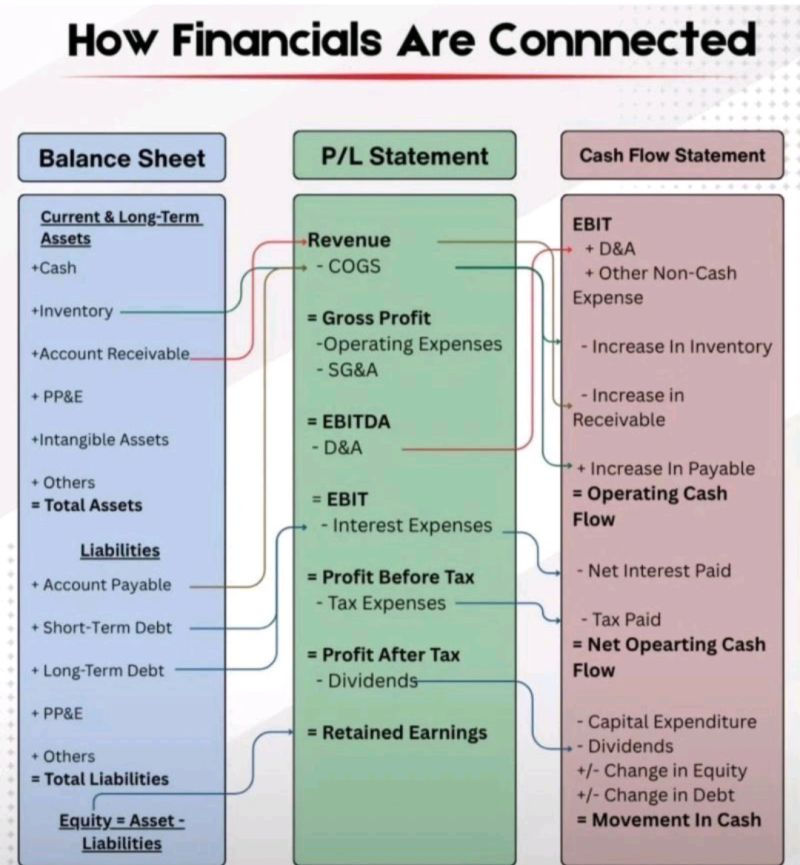
One of the most valuable functions of bookkeeping is producing accurate financial statements.
Profit and Loss Statement
Shows:
Revenue
Expenses
Net Profit
This report answers:
“Did my business make money?”
Balance Sheet
Shows:
Assets
Liabilities
Owner Equity
This report answers:
“What does my business own and owe?”
Cash Flow Statement
Shows:
Sources of cash
Uses of cash
This report answers:
“Where did my cash go?”
Without bookkeeping, these reports are either inaccurate or impossible to create.
Bookkeeping Identifies Business Trends
Successful businesses track trends over time.
Bookkeeping helps reveal:
Seasonal fluctuations
Revenue growth
Expense increases
Customer trends
Profit margin changes
Example
A business owner notices:
January Revenue: $8,000
February Revenue: $9,500
March Revenue: $11,000
April Revenue: $12,500
This trend indicates growth and can support future planning decisions.
Without bookkeeping, these patterns often go unnoticed.
Bookkeeping Supports Better Budgeting

A budget is only as good as the information used to create it.
Bookkeeping provides historical data that helps businesses create realistic budgets.
Business owners can determine:
Average monthly expenses
Expected revenue
Seasonal patterns
Growth opportunities
Instead of guessing, decisions become data-driven.
Bookkeeping Helps Prepare for Tax Season

One of the most common reasons businesses seek bookkeeping services is tax preparation.
Clean bookkeeping helps:
Reduce tax-time stress
Minimize errors
Organize deductions
Improve CPA efficiency
Support compliance
Examples of Common Deductions
Office expenses
Software subscriptions
Vehicle expenses
Business insurance
Professional services
Marketing expenses
Accurate bookkeeping ensures these transactions are properly documented throughout the year.
Bookkeeping Helps Detect Problems Early
Financial issues rarely appear overnight.
Most problems develop gradually.
Bookkeeping can identify:
Declining revenue
Increasing expenses
Cash shortages
Customer payment issues
Profit margin erosion
Example
A business notices advertising expenses increased by 40% over six months while revenue remained flat.
Bookkeeping helps identify the issue early enough to make adjustments.
Bookkeeping Creates Better Business Decisions
Every business decision has financial consequences.
Examples include:
Hiring employees
Purchasing equipment
Expanding services
Opening additional locations
Increasing marketing budgets
Bookkeeping provides the financial information needed to evaluate these decisions properly.
Instead of relying on instinct alone, business owners can rely on data.
Bookkeeping Supports Business Growth

As businesses grow, financial complexity increases.
Growth often brings:
More transactions
More customers
Additional vendors
Payroll responsibilities
Equipment purchases
Bookkeeping systems help maintain organization and visibility during periods of expansion.
Without proper bookkeeping, growth can become difficult to manage.
Bookkeeping Helps Secure Financing
Lenders frequently request financial records before approving loans.
These may include:
Profit and Loss Statements
Balance Sheets
Cash Flow Reports
Tax Returns
Well-maintained bookkeeping demonstrates professionalism and financial stability.
Businesses with organized records often have an easier time obtaining financing than those with incomplete documentation.
Bookkeeping Is Valuable for Sole Proprietors and Single-Member LLCs
Many small business owners believe bookkeeping only matters for large companies.
This is a misconception.
Even businesses with limited transactions benefit from bookkeeping.
Examples include:
Freelancers
Consultants
Realtors
Contractors
Online Sellers
Service Providers
Regardless of size, every business benefits from understanding its financial position.
Bookkeeping and QuickBooks
Modern bookkeeping often involves accounting software such as QuickBooks Online.
QuickBooks helps businesses:
Track income and expenses
Reconcile accounts
Generate reports
Monitor cash flow
Manage invoices
However, software alone does not replace bookkeeping expertise.
The software provides tools.
Bookkeeping provides interpretation and financial insight.
Common Misconceptions About Bookkeeping
Myth #1: Bookkeeping Is Just Data Entry
Reality:
Bookkeeping involves analysis, organization, reporting, and financial oversight.
Myth #2: My Accountant Handles Everything
Reality:
Most accountants rely on accurate bookkeeping records to prepare tax returns and provide advice.
Myth #3: My Business Is Too Small
Reality:
Small businesses often benefit the most from strong bookkeeping practices.
Myth #4: My Bank Account Tells Me Everything
Reality:
Bank balances do not reveal profitability, liabilities, future obligations, or business performance.
How Professional Bookkeeping Benefits Business Owners
Professional bookkeeping can help business owners:
✓ Save time
✓ Reduce stress
✓ Improve decision-making
✓ Monitor profitability
✓ Prepare for taxes
✓ Understand cash flow
✓ Identify financial issues early
✓ Create realistic budgets
✓ Support business growth
✓ Improve financial confidence
These benefits extend far beyond transaction categorization.
Frequently Asked Questions
Is bookkeeping just categorizing expenses?
No. Categorization is one component of bookkeeping. Professional bookkeeping also includes reconciliation, reporting, analysis, financial statement preparation, and financial organization.
Why are financial statements important?
Financial statements help business owners understand profitability, cash flow, assets, liabilities, and overall business performance.
Can bookkeeping help me save money?
Yes. Accurate bookkeeping often identifies unnecessary expenses, financial inefficiencies, and opportunities for improvement.
Does QuickBooks replace a bookkeeper?
No. QuickBooks is a tool. A bookkeeper ensures information is recorded accurately and provides meaningful financial insights.
How often should bookkeeping be updated?
Most businesses benefit from monthly bookkeeping, while some businesses may require weekly or more frequent review.
Is bookkeeping important for sole proprietors?
Absolutely. Sole proprietors need accurate records for budgeting, taxes, profitability analysis, and business planning.
Bookkeeping Is About Understanding Your Business
Categorizing transactions is important, but it is only one piece of the puzzle.
Professional bookkeeping helps transform financial information into meaningful insights that support smarter decisions, stronger cash flow management, better tax preparation, and long-term business growth.
Businesses that understand their numbers are often better equipped to adapt, grow, and succeed in today’s competitive environment.
Whether you are a sole proprietor, contractor, consultant, small business owner, or growing company, bookkeeping provides the financial foundation necessary for making informed decisions with confidence.
Understanding your finances starts with accurate bookkeeping.
At RH Personal Bookkeeping Services LLC, we help individuals, households, and small businesses gain clarity into their finances through professional bookkeeping services, financial organization, and practical financial guidance.
Ready to gain a better understanding of your finances?


Comments