

Construction Bookkeeping Basics: A Guide for Contractors and Construction Business Owners
- rhpersonalbookkeep
- Jun 6
- 5 min read


Construction businesses face unique financial challenges that differ significantly from most other industries. Unlike many businesses that provide a single service or sell a product, construction companies often manage multiple projects simultaneously, purchase materials for specific jobs, hire subcontractors, track labor costs, and operate with long project timelines.
Because of these factors, maintaining accurate bookkeeping is essential for understanding profitability, controlling costs, and making informed business decisions.
Whether you are a general contractor, remodeling company, electrician, plumber, roofer, landscaper, or specialty contractor, understanding construction bookkeeping basics can help build a stronger financial foundation for your business.
What Is Construction Bookkeeping?
Construction bookkeeping is the process of recording, organizing, and managing financial transactions related to construction projects and business operations.
Unlike standard bookkeeping, construction bookkeeping focuses heavily on tracking costs and profitability by individual project or job.
Proper bookkeeping helps construction businesses:
Monitor project profitability
Track labor and material costs
Manage cash flow
Prepare accurate financial reports
Maintain tax-ready records
Improve business decision-making
Without accurate bookkeeping, construction business owners may struggle to understand whether projects are generating profits or losses.
Why Construction Bookkeeping Basics Matters
Many contractors focus primarily on completing projects and serving clients. However, financial management is equally important.
Strong bookkeeping helps answer questions such as:
Which jobs are most profitable?
Are project estimates accurate?
Are labor costs too high?
Is cash flow healthy?
Are projects staying within budget?
Is the business making money overall?
Bookkeeping provides the information needed to answer these questions and make adjustments when necessary.
Separating Business and Personal Finances
One of the first bookkeeping basics every contractor should implement is separating business and personal finances.
This includes:
Maintaining a dedicated business bank account
Using a business credit card
Avoiding personal purchases from business accounts
Tracking owner contributions and owner draws properly
Keeping finances separate makes bookkeeping easier, improves financial reporting accuracy, and simplifies tax preparation.
Understanding Job Costing

Job costing is one of the most important bookkeeping practices in the construction industry.
Job costing tracks expenses and revenue associated with a specific project.
Instead of looking only at company-wide finances, job costing allows contractors to determine profitability on individual jobs.
Common Job Costs Include:
Labor
Materials
Equipment
Permits
Subcontractors
Project-specific expenses
Example
A remodeling project generates:
Revenue: $30,000
Costs:
Materials: $8,000
Labor: $9,000
Subcontractors: $2,000
Total Costs:
$19,000
Profit:
$30,000 - $19,000 = $11,000
Without job costing, it can be difficult to identify which projects generate the highest profits.
Tracking Construction Expenses
Accurate expense tracking is essential for maintaining organized financial records.
Common construction expenses include:
Materials
Lumber
Concrete
Drywall
Roofing materials
Flooring
Electrical supplies
Equipment
Equipment rentals
Equipment maintenance
Fuel
Repairs
Labor
Employee wages
Payroll taxes
Workers' compensation
Office Expenses
Software
Office supplies
Phone services
Insurance
Proper categorization of expenses improves reporting accuracy and helps business owners understand where money is being spent.
Managing Labor Costs
Labor is often one of the largest expenses in a construction business.
Tracking labor costs accurately helps contractors:
Estimate future jobs more effectively
Monitor project profitability
Manage payroll expenses
Improve bidding accuracy
Time tracking systems can help ensure labor costs are assigned to the appropriate projects.
Tracking Material Costs
Material costs can fluctuate significantly throughout a project.
Construction businesses should maintain records for:
Purchase orders
Supplier invoices
Material receipts
Inventory purchases
Accurate material tracking helps prevent cost overruns and improves project profitability analysis.
Understanding Cost of Goods Sold (COGS)
Cost of Goods Sold (COGS) represents the direct costs associated with completing a project.
In construction, COGS often includes:
Materials
Direct labor
Subcontractors
Equipment directly used on projects
Tracking COGS helps contractors calculate gross profit and evaluate project performance.
Gross Profit Formula
Revenue - Cost of Goods Sold = Gross Profit
Example
Project Revenue: $50,000
COGS: $35,000
Gross Profit: $15,000
This information helps determine whether projects are generating acceptable profit margins.
Managing Cash Flow

Cash flow management is critical in construction because projects often involve large expenses before payment is received.
Common cash flow challenges include:
Delayed customer payments
Material purchases
Payroll obligations
Equipment expenses
Unexpected project costs
Strong bookkeeping helps contractors monitor cash flow and prepare for upcoming expenses.
Accounts Receivable
Accounts Receivable represents money owed to the business by customers.
Construction companies should monitor:
Outstanding invoices
Customer payment status
Past-due accounts
Maintaining healthy Accounts Receivable helps improve cash flow and reduce collection issues.
Accounts Payable
Accounts Payable represents money owed by the business to suppliers and vendors.
Examples include:
Material suppliers
Equipment rental companies
Utility providers
Insurance providers
Tracking Accounts Payable helps contractors avoid late fees and maintain strong vendor relationships.
Construction Payroll Basics
Payroll management is another critical component of construction bookkeeping.
Construction payroll may involve:
Hourly employees
Salaried employees
Overtime
Payroll taxes
Workers' compensation
Subcontractor payments
Accurate payroll records help ensure compliance and support proper financial reporting.
Financial Reports Every Contractor Should Review
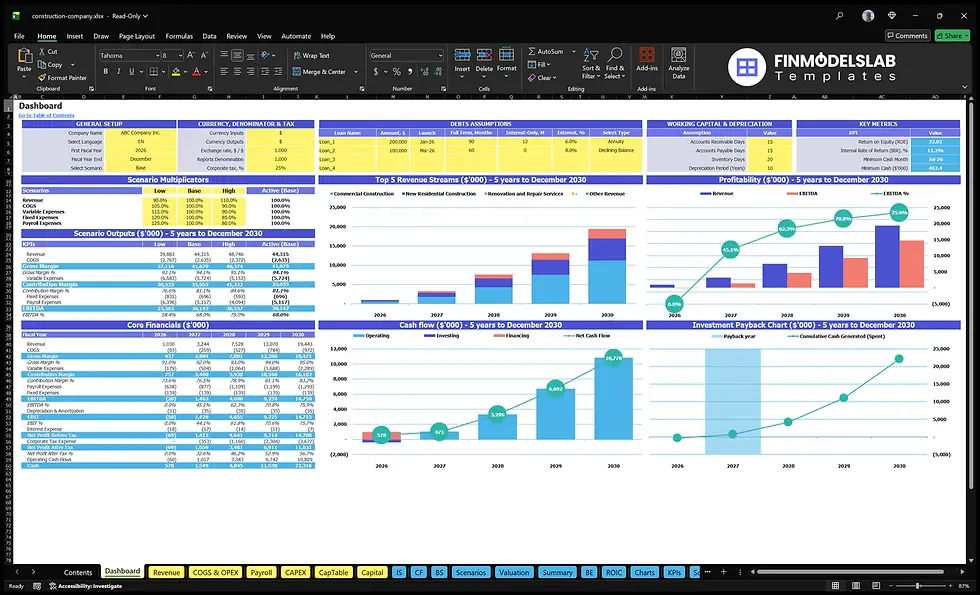
Construction business owners should regularly review key financial reports.
Profit and Loss Statement
Shows:
Revenue
Expenses
Profitability
This report helps determine whether the business is making money.
Balance Sheet
Shows:
Assets
Liabilities
Equity
The Balance Sheet provides a snapshot of overall financial health.
Cash Flow Statement
Shows:
Cash received
Cash spent
Changes in cash position
Cash flow reporting is especially important for construction businesses.
Job Profitability Reports
These reports help contractors evaluate individual project performance.
They can reveal:
Profitable projects
Cost overruns
Estimating issues
Pricing opportunities
Common Construction Bookkeeping Mistakes
Many contractors encounter bookkeeping challenges as their businesses grow.
Mixing Personal and Business Expenses
This creates confusion and reporting errors.
Failing to Track Job Costs
Without job costing, profitability becomes difficult to measure.
Poor Receipt Management
Missing documentation can create bookkeeping and tax issues.
Ignoring Financial Reports
Reports provide valuable information for business decisions.
Falling Behind on Bookkeeping
Delayed bookkeeping often leads to inaccurate records and missed opportunities.
Benefits of Organized Construction Bookkeeping
Contractors who maintain organized financial records often experience:
Better financial visibility
Improved cash flow management
More accurate project estimates
Better pricing decisions
Stronger profitability tracking
Easier tax preparation
More informed business decisions
Bookkeeping is not just about recording transactions—it is about understanding the financial health of the business.
How Construction Bookkeeping Supports Business Growth
As construction businesses grow, financial complexity increases.
Bookkeeping helps business owners:
Monitor profitability
Evaluate project performance
Manage labor costs
Control expenses
Plan for growth
Improve decision-making
Accurate records provide a foundation for long-term success.

Frequently Asked Questions
What makes construction bookkeeping different from regular bookkeeping?
Construction bookkeeping places greater emphasis on job costing, project profitability, labor tracking, and material cost management.
Why is job costing important?
Job costing helps contractors determine whether individual projects are profitable and identify opportunities for improvement.
What financial reports should construction companies review?
Most construction businesses should regularly review Profit and Loss Statements, Balance Sheets, Cash Flow Statements, and Job Profitability Reports.
Should construction businesses separate personal and business finances?
Yes. Separate accounts improve bookkeeping accuracy, financial reporting, and tax preparation.
What is Cost of Goods Sold in construction?
COGS typically includes direct labor, materials, subcontractors, and other project-related costs directly associated with generating revenue.
How often should bookkeeping be updated?
Bookkeeping should ideally be updated weekly or monthly to maintain accurate records and financial visibility.
Final Thoughts
Understanding construction bookkeeping basics is essential for contractors and construction business owners who want to improve profitability, manage cash flow, and maintain organized financial records.
By tracking expenses, monitoring job costs, reviewing financial reports, and maintaining accurate bookkeeping systems, construction businesses can gain better visibility into their operations and make more informed decisions.
Whether you are managing a small contracting company or a growing construction business, RH Personal Bookkeeping Services LLC delivers strong bookkeeping practices that can help support long-term financial success.


Comments